
Enhancing CPR Training through Aerobic Exercise
Aerobic Exercise Enhances CPR Training
Vol. 20 No. 1 : 2025 (169-182)

Abstract
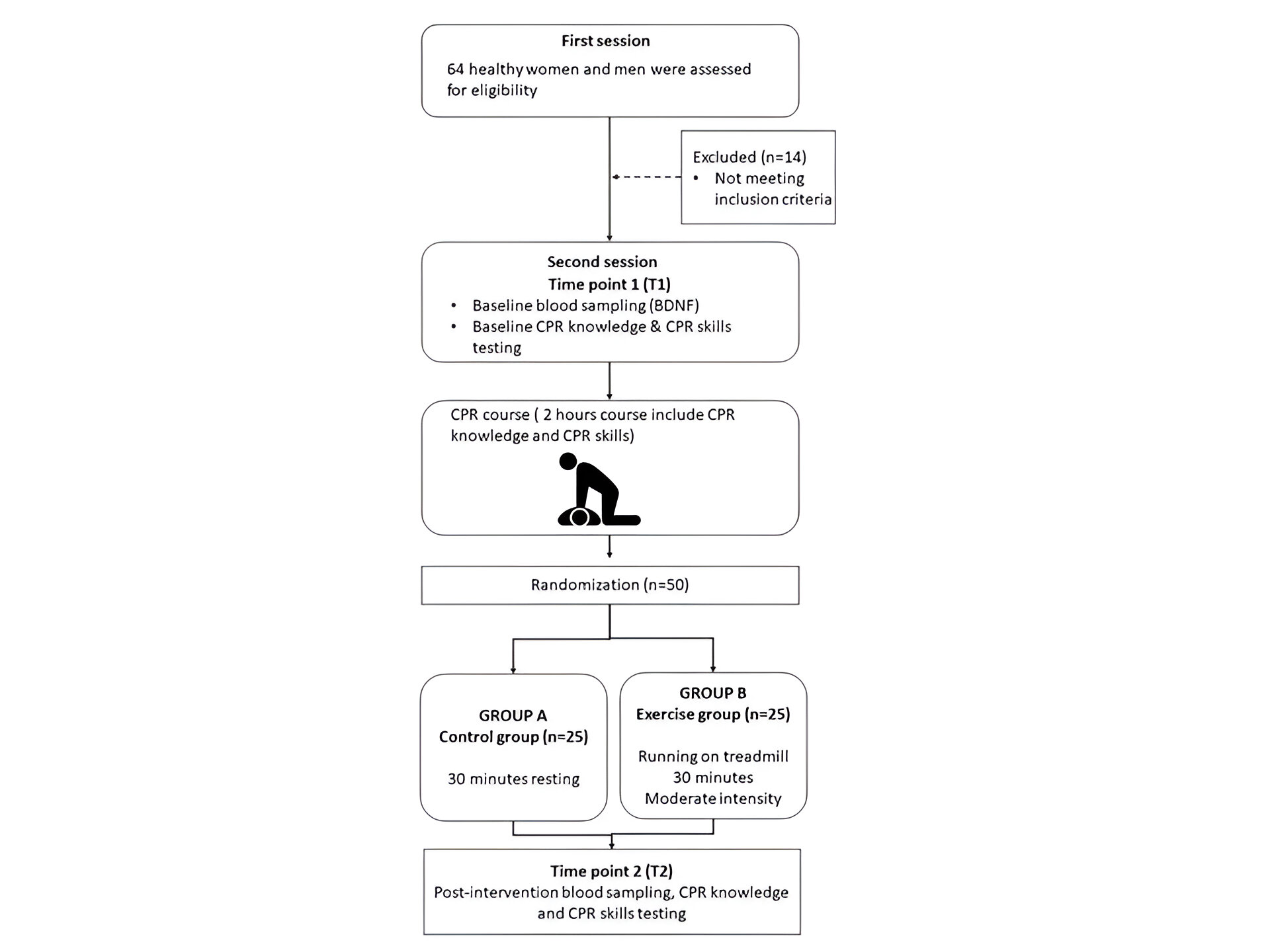
Aerobic exercise is known for its many health benefits, such as improved cardiovascular fitness and weight loss. Interestingly, acute aerobic exercise has been shown to improve learning and cognitive function. However, the relationship between acute aerobic exercise and learning practical cardiorespiratory resuscitation (CPR) has not yet been established. The aim of this study was to investigate the effect of acute moderate-intensity aerobic exercise on the learning of CPR knowledge and skills and the effects on the concentration of brain-derived neurotrophic factor (BDNF). A total of 50 participants (mean age: 30.96 + 4.33 years) were randomly assigned to either the exercise or control group. The exercise group completed a 30-minute run on the treadmill at moderate intensity, while the control group rested without any physical activity. Knowledge and acquisition of CPR skills were assessed before and after the intervention. The results revealed a significant difference between the exercise group and the control group immediately post-intervention, accompanied by a notable increase in serum BDNF levels (P < 0.05). The findings suggest that acute aerobic exercise can improve CPR learning, possibly through BDNF-mediated neurobiological mechanisms. This research contributes valuable insight into the effects of exercise on cognition, which in turn has implications for CPR learning programmes to optimise the learning outcome of CPR.
Keywords :
Aerobic exercise; cardiorespiratory resuscitation; learning function,
Correspondance Address
Amilia Aminuddin. Department of Physiology, Faculty of Medicine, Universiti Kebangsaan Malaysia, Jalan Yaacob Latif, Bandar Tun Razak, 56000 Cheras, Kuala Lumpur, Malaysia. Tel: +603-91458606 Email: amilia@ppukm.ukm.edu.my


