
Postmortem Analysis of Cardiac Troponin I by High-Sensitivity Troponin I Assay
Postmortem High-Sensitivity Troponin I Analysis
Vol. 20 No. 1 : 2025 (328-339)

Abstract
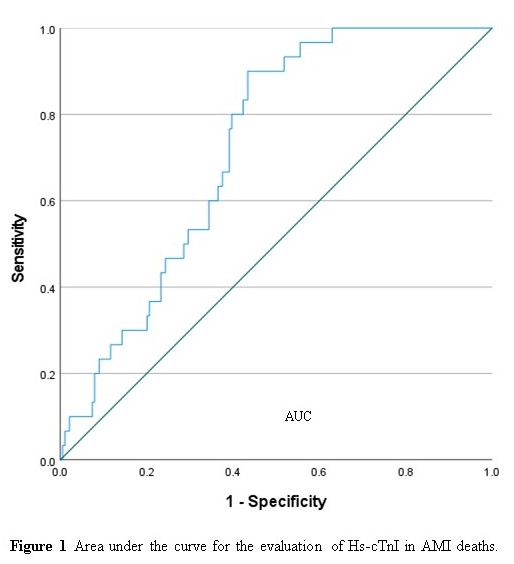
Postmortem troponin I analysis in autopsy settings can be a valuable tool for forensic pathologists. This study aimed to determine the association of postmortem cardiac troponin levels in cardiac-related death, such as acute myocardial infarction (AMI), and traumatic-related death cases using high-sensitivity cardiac troponin I (hs-CTnl) assays. This retrospective cross-sectional study examined natural and unnatural medicolegal deaths from July 2022 to December 2023. Autopsy reports were reviewed to collect demographic information, autopsy findings, and cardiac troponin levels. The levels of cardiac troponin were analysed using high-sensitivity cardiac troponin assays. A total of 219 cases were analysed, revealing that the median level of hs-CTnl was higher in cardiac death cases (5914.80 pg/ml) compared to non-cardiac deaths (1246.10 pg/ml). Significant differences were noted between the median cardiac troponin level in deaths due to AMI (12145.25 pg/ml) and other causes of death. Receiver operating characteristic analysis showed an area under the curve of 0.723 for hs-cTnI in AMI deaths. Also, various types of traumatic deaths exhibited significant differences in troponin levels. A total of 219 cases were analysed, comprising 84 cardiac deaths, and 135 non-cardiac deaths, which included 59 traumatic death cases. The median level of hs-CTnl was significantly higher in cardiac death cases (5914.80 pg/ml) compared to non-cardiac deaths (1246.10 pg/ml) (p < 0.01). Significant differences were noted between the median cardiac troponin level in deaths due to AMI (12145.25 pg/ml) and other causes of death. Receiver operating characteristic analysis showed an area under the curve of 0.723 for hs-cTnI in AMI deaths. Also, various types of traumatic deaths exhibited significant differences in troponin levels. However, the lack of established reference values requires individual laboratories to establish their own benchmarks to support forensic pathologists in complementary diagnostic testing for postmortem cases. In conclusion, hs-CTnl offers reliable postmortem testing to assist in diagnosing AMI.
Keywords :
High-sensitivity cardiac troponin I; cardiovascular disease; forensic medicine; postmortem biochemistry; trauma,
Correspondance Address
Dr Wan Mohammad Hafiz bin Wan Razali. Department of Forensic Pathology, Faculty of Medicine, Sungai Buloh Campus, Universiti Teknologi MARA, Sungai Buloh, Selangor, Malaysia. Tel: +6016-9866537 Email: drhafizrazali@gmail.com


